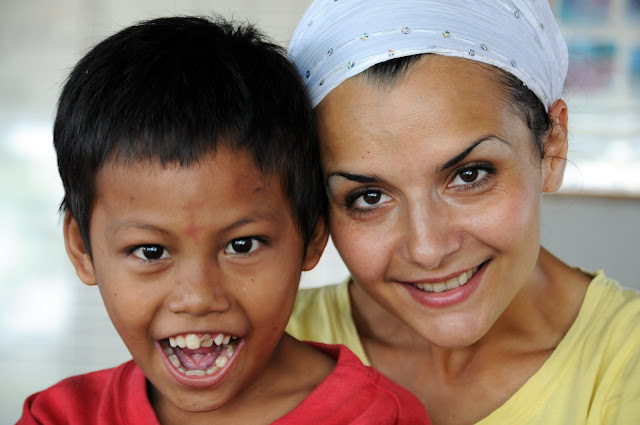
WELCOME! ¡BIENVENIDOS!

Link to / Enlace a "WELCOME! ¡BIENVENIDOS!"

Link: Users Guide to blog ESC-APE!! / Enlace: Guía Usuarios blog ESC-APE!!

*********************************************************************************************

Sunday, 12 October 2008

ELENA'S PATIENTS (II) / LOS PACIENTES DE ELENA (II)


Click on the photo or HERE to meet more of Elena's patients / Haz clic en la foto ó AQUI para conocer a más pacientes de Elena.

Hello! Time flies, and this is our last posting before returning to the UK! But we still have so many things to tell you that will keep posting for a long while once home. For the time being, please find below Elena’s follow-up on her patients.


¡Hola! El tiempo vuela, ¡y este es nuestro último artículo antes de volver al Reino Unido! Pero todavía tenemos tantas cosas que contaros, que seguiremos escribiendo por un buen rato una vez en casa. Por ahora, leed a continuación el segundo artículo de Elena sobre sus pacientes.

Although we have already finished our projects, I would like to tell you some stories about my patients. Within this last month (September) I have had the opportunity to treat 4 more kids with cerebral palsy, a baby with an unknown diagnosis but who looked hypotonic and 3 more people with hemiplegia. I have also helped one of the physiotherapists to complete a case study that he has to present in October.

Aunque ya hemos terminado nuestro proyecto, me gustaría contaros algunas anécdotas de algunos pacientes del centro. En este último mes he tenido la oportunidad de tratar a 4 niños más con parálisis cerebral, a un bebe sin diagnóstico confirmado pero que parecía hipotónico y a 3 personas con hemiplejía.También he ayudado a uno de los fisioterapeutas en la preparación de un caso clínico que tiene que presentar en el mes de Octubre.

Some of the cases that I am going to describe suggest that quite a lot of people can not carry out their preferred activities due to emotional, social and even cultural issues rather than due to their physical problems. To the point that some of these people assume the patient’s role as a unique role because culturally that is what is expected from them. Logically every individual is different, however to change or to give the opportunity to someone to be able to chose how active and significant they want their life to be, based on their own reality, is a task that takes more than 3 months. All of the above justify again the need of having a holistic approach in rehabilitation and an integral view of the patient more than just a mere physical disability.

Alguno de los casos que voy a describir refleja que muchas veces las personas no pueden desempeñar las actividades que desean llevar a cabo debido a circunstancias emocionales, sociales e incluso culturales y no tanto por el problema físico en sí. Hasta el punto de que algunas de ellas asumen su rol de paciente como único rol, ya que culturalmente es lo que se esperan de ellas. Lógicamente cada caso es un mundo pero cambiar o dar la oportunidad a la persona para que pueda elegir, en función de su realidad, cómo de activa y significativa quiere que sea su vida, es una labor que llevaría más de 3 meses. Ejemplos como los que describo justifican una vez más el enfoque holístico que la rehabilitación debería de tener, y el abordar al paciente de forma integral no como un mero déficit físico.

This time the hemiplegic patients were all women, in contrast with the first two months where all were men.
One of them was an 18-year-old with her left side affected. Her main problem was the pain, which she self scored as a 9, in a 1 to 10 scale. She believed that when she was 1 years old she had meningitis. Although the affected upper limb remained with an internal rotation of the shoulder and it adopted a flexor pattern during effort activities, this and the lower limb had quite good and functional active movements of their joints. In my opinion her main problems was the left side neglect, the lack of propioception and the altered sensation in that side, which made her to ignore that side. But when she had to use it, due to her roles as a daughter and as a student (housework, dressing maker student, etc) she was not aware about its position and did not move it correctly, originating the pain and establishing a vicious circle of avoidance and lack of use.


Esta vez las personas hemipléjicas eran todas mujeres, en contraste con los dos primeros meses en que la mayoría fueron hombres.
Una de ellas era una chica de 18 años que tenía el lado izquierdo afectado. Su mayor problema era el dolor, el cual clasificó como 9 en una escala del 1 al. Por lo que cuenta ella, parece ser que tuvo una meningitis cuando tenía 1 año. Aunque el miembro superior afectado tiende a la rotación interna del hombro, y al patrón flexor cuando realiza un esfuerzo, tanto éste como el inferior tienen movimientos activos de sus articulaciones bastante buenos y funcionales. A mi parecer su problema mayor era la negligencia, la falta de propiocepción y la alteración de la sensibilidad en ese lado, por lo que tiende a no utilizarlo pero cuando lo tiene que hacer, debido a sus roles como hija y como estudiante (tareas domésticas, curso de arte y confección, etc.) no es consciente de su posición y hace un mal uso del mismo, lo que le provoca dolor y establece un círculo vicioso de evitación del mismo.

After 2 weeks of treatment - which included upper limb relaxation, stretching, weight bearing to the affected side, facilitation of active normal movements, sensorial re-education, postural education and corporal awareness- her pain was reduced from 9 to 2 in a 1 to 10 scale. Although she was independent with all the basic and instrumental activities of daily living, due to the over use of the good side, the next logic step would have been to analyse her daily routine and the normal sequence of movements of all the activities that she was responsible of and make her try to carry out them with normal patterns of movements, which could implicate as well some environmental rearrangements. Unfortunately the dressmaking workshop where she worked was not open due to holidays and her mother was too busy working at the rice fields to come to the clinic to learn about the implications of the treatment. The girl had to go back home to help her mother; however she agreed they would come back in October, regardless of me being there or not because the physiotherapists can continue what I started.

Después de 2 semanas de tratamiento - que incluía relajación del miembro superior, estiramientos, traslado del peso al lado afectado, facilitación de movimientos activos normales, reeducación sensorial, educación postural y conciencia corporal- su dolor se redujo de 9 a 2 en una escala del 1 al 10. Aunque ella era independiente en las actividades de la vida diaria tanto básicas cómo instrumentales debido al sobre uso del lado sano, el paso lógico a seguir hubiera sido analizar su rutina diaria, la secuencia de movimiento de todas las actividades de las que ella era responsable e intentar que las llevara a cabo con patrones normales de movimiento, lo que podía implicar también una reestructuración del entorno. La pena fue que el taller de costura en el que trabajaba estaba cerrado por vacaciones y su madre estaba muy ocupada en los campos de arroz para venir a la clínica y aprender lo que conllevaba el tratamiento. Ella se tuvo que ir para ayudar a la madre y quedamos con que volvían para el centro en Octubre, y aunque yo no esté los fisioterapeutas pueden seguir lo que empecé.

The other 2 people with hemiplegia were middle age women who had a stroke due to high blood pressure. One of them had it 6 years ago and the other 3 years ago. One had the left side affected and the other the right side.
With the first one I worked more with the social and emotional issues that were stopping her to participate in significant activities, such as low self-esteem, embarrassment of being seen or judged, and lack of significant active roles, without forgetting how the family has influenced on this lack of activities and daily structure by overprotecting her.

Las otras dos mujeres con hemiplejías eran de mediana edad, las dos tuvieron un ACV debido a la tensión arterial alta. Una lo tuvo hace 6 años y la otra 3. A la primera se le afectó el lado izquierdo y a la segunda el derecho.
A destacar el caso de la primera, con la que trabajé más aspectos sociales y emocionales, que le impedían participar en actividades significativas, tales como la baja autoestima, la vergüenza a ser vista y juzgada, y la falta de roles activos y significativos, sin olvidar de cómo la familia influenciaba en esa falta de actividad y estructura diaria sobreprotegiéndola.

After several hours of talking and a lot of empathy, the woman in the end decided that she wanted to bake again some little eggs cakes, with the aim of selling them in the future. Despite the physical component difficulties the main 3 components that were stopping her of baking were related to the embarrassment, the fear of falling and the fear of fainting. After a join activity analysis of the chosen task, of the steps involved, exploring possible problems and solution, making her aware about her way of thinking (automatic negative thoughts), etc she managed to go to the central market, (first time after 6 years!), to buy the ingredients to bake 60 little egg cakes which, by the way, were delicious.

Después de horas de charla y empatía, la paciente decidió que le gustaría volver a hacer bizcochitos de huevo para poder venderlos en el futuro. Aparte del componente físico, sus 3 impedimentos principales estaban relacionados con la vergüenza, el miedo a caerse y el miedo a desmayarse. Después de hacer con ella un análisis de la actividad elegida por ella, de los pasos a seguir, de explorar posibles problemas y soluciones, de hacerla consciente de su forma de pensar (pensamientos automáticos negativos), etc. conseguí que fuera al mercado central (¡después de 6 años sin pisarlo!) para comprar los ingredientes y hacer 60 bizcochitos de huevo, que por cierto le salieron buenísimos.

After my intervention, in a 1 to 10 scale, her embarrassment gradually went down to 1 and her fear of falling and fainting to 0. In order to consolidate this task, to make it easier, more automatic and less tired, she needed some environmental rearrangements, to follow a specific sequence of steps and a lot of practice. It was here where I found a difficult barrier, the family. If the patient wanted to get a more active role that would implicate change not only for her but as well for the family, and after 6 years their roles were quite well established, and I was going to struggle trying to change that with the little time I had left ( with 1 week before I finished my project). We agreed they would think about it and contact the centre as soon as a decision was taken.

Después de mi intervención, en una escala del 1 al 10 la vergüenza pasó de forma gradual a 1 y el miedo a desmayarse y a caerse a 0. Para poder consolidar esa tarea y que pasara a ser más fácil, casi automática y menos cansada, necesitaba hacer unos cambios en el ambiente, seguir una secuencia de pasos precisa y mucha práctica. Y ahí es donde me encontré con la barrera más difícil, la familiar. Que la paciente tuviera un rol más activo suponía cambios no sólo para ella sino también para su familia, y después de 6 años los roles estaban bastante establecidos, por lo que cambiar eso era difícil con tampoco tiempo con el que contaba (una semana antes de terminar mi proyecto). Así que quedamos en que se lo pensarían y que se pondrían en contacto cuando tomaran una decisión.

The common problem I have found when treating cerebral palsy kids, is that the majority of the treatment relies on the families. As I mentioned on my first article (22 August 08), due to social and economic circumstances the parents need to work on the rice fields and to look after other children, and hence the affected child does not have a lot of opportunities to get treatment at the centre.
Maybe this is why the physiotherapists’ input focuses more on the child positioning, and on the provision of equipment, rather than on finding out and treating the physical or neurological reasons that are stopping the child’s development (i.e. increase tone, pathological reflex, lack of balance, proximal joint weakness, etc, etc), thus restricting the rehabilitation potential.

El problema común que he encontrado a la hora de tratar niños con parálisis cerebral es que la mayoría del tratamiento recae en la familia. Como mencioné en el primer artículo (22 Agosto 08), debido a las circunstancias sociales y económicas los padres necesitan trabajar en los campos de arroz y cuidar de sus otros hijos, por lo que el niño afectado no tiene muchas oportunidades de ser tratado en el centro.
Quizá debido a eso, los fisioterapeutas hacen más hincapié en el posicionamiento del niño y la provisión de equipamiento, más que en descubrir y tratar las razones físicas y neurológicas que impiden su desarrollo (aumento de tono, reflejos patológicos, falta de equilibrio, debilidad de las articulaciones proximales, etc, etc.), restringiendo así su potencial rehabilitador.

In my opinion one thing is not incompatible with the other, apart from doing a detailed assessment of the child and a precise and straightforward treatment plan for the family to carry out, the family daily routine should be analysed in more depth, i.e. their timetables, habits, responsibilities, values, priorities, what they think is difficult… with the aim of reaching agreements leading to a well established routine which could make compatible the child therapy and the family commitments. So that the activities of daily living would be part of the therapy, and different, clear, simple and specific responsibilities could be allocated to different family members. Obviously, to be able to carry out this time is needed, as well as family education and training and a lot of support and availability from the professionals to do a good follow up.

En mi opinión una cosa no es incompatible con la otra, a parte de hacer una valoración muy detallada del niño y unas pautas de tratamiento muy precisas y sencillas para que la familia las lleve a cabo, se tendrían que analizar más profundamente la rutina diaria de la familia, sus horarios, sus hábitos, sus responsabilidades, sus valores, prioridades, que les parece difícil… y llegar a acuerdos, a rutinas muy establecidas, que hicieran compatible la terapia del niño con los compromisos familiares. De tal modo que las actividades de la vida diaria fueran parte de la terapia y se adjudicaran responsabilidades muy claras, simples y específicas a diferentes miembros de la familia. Lógicamente, para llevar esto a cabo, se necesita tiempo, formar y educar a las familias, y mucho apoyo y disponibilidad por parte de los profesionales para poder hacer un buen seguimiento.

I shared and discussed these impressions with the physiotherapists I have worked with. In October they have got a workshop and they are going to present the case study that we prepared before I left, so they will have the opportunity to reflect about these issues with the rest of the physiotherapists, mentors and site managers. My wish is to encourage discussions and reflections to improve the clinical practice and consequently the quality of life of the patients and their families.

Estas impresiones las compartí y discutí con los fisioterapeutas con los que he trabajado. En octubre tienen un seminario donde tienen que presentar el caso clínico que hicimos antes de que me fuera, y tendrán la oportunidad de reflexionar sobre las mismas con el resto de los fisioterapeutas, mentores y con los gestores de los centros. Mi deseo es que fomente la discusión y que las reflexiones a las que se lleguen mejoren la práctica clínica y en consecuencia la calidad de vida del paciente y de sus familias.

It has been very rewarding and incredible to work with the patients, and although 3 months here is very little time to implement any more permanent change, I am pleased to say that they are enough to make a difference on an individual level, as I believe I have done with the patients I have treated. During this time, there have also been difficult and challenging times, mainly related to the language barrier (my level of Khmer was very basic, and there wasn’t always someone available to act as an interpreter) and to the fact that culturally we had different communication styles, so making yourself understood was at times a serious issue.

Ha sido muy satisfactorio e increíble trabajar con los pacientes, me consuela saber que aunque tres meses aquí es muy poco para implementar cambios mas permanentes, son suficientes para marcar una diferencia individual, como creo que he hecho con los pacientes que he tratado. Durante este tiempo ha habido momentos difíciles y desafiantes, especialmente relacionados con la barrera del lenguaje (mi nivel de camboyano era muy básico y no siempre había alguien disponible que te hiciera de traductor) y culturalmente también teníamos diferente forma de comunicarnos, así que hacerte entender podía ser un gran reto.

Finally, just a few lines to tell you that we are very sad of leaving and that in the future we will definitively be related to this wonderful country and its people, in one way or another.

Finalmente, un par de líneas para deciros que nos da mucha pena irnos y que en el futuro seguro que estaremos relacionados de una manera u otra con este magnifico país y con sus gentes.


Read more on this post/ Continuar leyendo esta entrada...

Tuesday, 30 September 2008

TRAFFIC IN CAMBODIA - EL TRÁFICO EN CAMBOYA


Photos: click HERE / Fotos: haz click AQUI

Our friend Laura (another Cambodia-addict, check her blog: http://realtravel.com/cambodia-trips-i3517749.html) sent us a copy of what she believes to be a translation of the very rare Cambodian Traffic Law Booklet... to which we have added some of our own experiences... enjoy, we vouch for its veracity!

Nuestra amiga Laura (otra adicta a Camboya, visita su blog: http://realtravel.com/cambodia-trips-i3517749.html) nos ha mandado una copia de lo que ella cree que es una traducción del rarísimo ejemplar Normas de Tráfico Camboyanas... a las que hemos añadido algunas de nuestras experiencias...¡disfrutadlo, avalamos su veracidad!

Traffic lights:The beautiful colours designed for spectator entertainment. If you are lucky you might see one change colour. Stopping to observe colour change awards you good luck in your next life. Stopping in not compulsory.

Semáforos: Bonitos colores diseñados para entretenimiento de los espectadores. Si tiene suerte puede que vea un cambio de color. Pararse a observar un cambio de color le traerá buena fortuna en su próxima vida. Pararse no es obligatorio.

White line in middle of road:A reminder of general direction to travel along roads, lines are to be followed. They are not (as some countries would like us to believe) there to divide traffic. You may use as much road as you need into oncoming traffic.

Línea blanca en mitad de la calzada: hay que seguirla, como recordatorio de la norma genérica de usar carreteras para circular. Al contrario de lo que algunos países quieren hacernos creer, no sirve para delimitar el sentido del tráfico. Usted puede usar tanto como necesite de la calzada del tráfico de frente.

Zebra crossings: A very nice pattern, don't you think? We used up the excess paint making these because we saw some on American film. Tourists mayattempt to cross the road on our nice patterns. This doesn't mean you have to slow down or stop. Maintain speed and dodge the crazy big nose. They have mental problems.

(Translators note: the Khmer word for foreigner is barang, meaning big nose as opposed to Cambodians typical flat profile...Combinations of the word barang also mean French and onion...hence it is more than probable that it was a large nosed French national who first introduced onions in Cambodia)


Pasos de cebra: que diseño tan bonito, ¿no cree Vd.? Para hacerlos usamos la pintura que nos ha sobrado, porque lo vimos en una película americana. Los turistas intentarán cruzar la carretera por nuestros bonitos diseños. Esto no significa que usted tenga que aminorar la marcha o frenar. Mantenga la velocidad y esquive a los locos narigudos. Están de atar.

(N. del T: la palabra camboyana para extranjero es barang, que significa nariz grande, en contraposición al perfil chato de los camboyanos. Otras combinaciones de la palabra barang significan Francés y cebolla, de lo que se deduce que probablemente fue un francés narigudo el que primero introdujo las cebollas en Camboya)


Vehicle indicators:A design fault that affects every modern vehicle, indicator use is on individual choice. Having beautiful buzzinglights and noises is highly recommended, as this hypnotizes big noses and makes them spend more. Tunes are even better. They make mentally ill big noses seek you for their journey and tip you in (USD).

Intermitentes: Una fallo de diseño que afecta a todos los vehículos modernos, su uso es opción personal. Tener bonitas luces y cláxones ensordecedores es altamente recomendable, ya que estos hipnotizan a los narigudos y les hacen gastarse másdinero. Si se tienen melodías, mucho mejor: atraen a los narigudos enfermos mentales para que se les lleve, y les hacen dar propina en $.

Merging with the main traffic flow:Not really sure what it means. Some foreign idea. Maybe about coming out of side road. If coming out of side road, dontlook at anyone; remain in your own little world. Other traffic is sure to slow or stop to avoid you. May the force be with you.

Incorporación al tráfico principal: No estamos muy seguros de lo que esto significa. Una idea extranjera, quizás relacionada con salida de carreteras secundarias. Si usted viene desde una carretera secundaria, no mire a nadie, permanezca en Babia. Seguro que el resto del tráfico aminorará la marcha o frenará para evitarle. Que la fuerza le acompañe.

Traffic flow: Never heard of it, so just drive where you want, when you want; if a jam is caused by your 10-point turn just smile.

Sentido del tráfico: Ni idea de lo que es esto, así que conduzca donde quiera, cuando quiera; si crea un atasco mientras hace 10 maniobras para girar, simplemente sonría.

Speed signs:We think the French left these behind. They make interesting reading and a great tool for practicing numbers in foreign languages. They are in no way related to traffic speed. Please ignore.

Señales de velocidad: creemos que los franceses se las dejaron al irse de la Colonia. Son una lectura interesante y una gran herramienta para practicar números en otros idiomas. De ninguna manera están relacionadas con la velocidad del tráfico. Por favor ignórelas.

Recommended traffic speed:Driving as slow as possible in your highest gear indicates to the world how wonderful a person you are. We recommend strongly each individual decides his or her preferred speed.

Velocidad recomendada: Conducir lo más lento posible con la marcha más alta manda un mensaje al mundo de lo estupenda persona que es usted. Recomendamos fervientemente que cada uno decida su velocidad preferida.

Roads and footpaths: Where roads become jammed, footpaths are an easy alternative, as footpaths are to be viewed as a small road anyway. Pedestrians have no right of way when vehicles use small roads (footpaths).

Carreteras y aceras: Cuando haya atasco en la carretera, las aceras son una alternativa simple, puesto que de todos modos se las considera como mini-carreteras. Los peatones no tienen prioridad de paso cuando los vehículos usen las mini-carreteras (aceras).

Accidents:Everyone is expected to watch those who have crashed. We prefer all other vehicle users to stop and form as large a crowd as possible. Where big noses are involved, money is to be demanded immediately regardless of fault.

Accidentes:se espera que todo el mundo se ponga mirar a los accidentados. Preferimos que todos los demás usuarios de vehículos se paren y formen un barullo lo mas grande posible. Si hay narigudos involucrados, se les demandará dinero en el acto independientemente de quién tenga la culpa.

Horns:On the spot fines are now being given to owners whose horns don't work. It is compulsory to test your horn every 30 seconds to avoid fines. They also make an interesting sound that keeps passengers awake.

Claxon: A aquellos dueños de vehículos cuyo claxon no funcione se les multará en el acto. Es obligatorio hacerlo sonar cada 30 segundos para evitar ser multado. Además, hacen un sonido interesante que mantiene despiertos a los pasajeros.

Public transport:any self-respecting mean of public transport will display a 2 foot crack (minimum) on the windscreen. The Toyota Camry is the compulsory official model for taxis. On coaches the best thing to keep passengers happy is to play Cambodian karaoke full blast for hours.

Transporte público:todo medio de transporte público que se precie tendrá una raja de al menos medio metro en el parabrisas. Para los taxis, el Toyota Camry es el modelo oficialobligatorio. En los autobuses lo mejor para mantener contentos a los viajeros es karaoke camboyano a todo volumen durante horas.

Maximum capacity: anything less than 3 people on a scooter is considered a waste of space and resources. Gravity laws dont affect scooters: there is nothing at all that cant be transported on them. A medium size saloon car has a minimum capacity of eight adults: four at the back (easy) and four at the front (two on the drivers seat, who will drive sideways, and two on the other seat). The number of children that can travel with adults is unlimited, whichever the means of transport

Ocupación máxima del vehículo: todo lo que sea menos de tres personas en una vespino se considera un derroche de espacio. Las leyes de la gravedad no son aplicables a las vespinos: no hay nada, pero nada de nada, que no pueda ser transportado en ellas. Un turismo mediano tiene una capacidad mínima para ocho adultos: cuatro atrás (fácil) y cuatro adelante (dos en el asiento del conductor, que conducirá de lado, y dos en el del copiloto). El número de niños que pueden viajar con los adultos es ilimitado, cualquiera que sea el medio de transporte.

Use of high beams: Only required when you are on the other side of the road, overtaking in your highest gear (as slowly as possible). This doesnt apply to motorcycles, for whom it is perfectly safe to drive in the middle of the night through dark alleys without any lights at all.

Luces largas: Sólo son necesarias cuando se esté en el otro lado de la carretera, adelantando con la marcha más alta (lo más lentamente posible). Esto no se aplica a los conductores de motocicletas, para los cuales es perfectamente seguro circular en medio de la noche por callejones oscuros sin ningún tipo de luces.

Anticipating traffic: please remember not to pay attention or look at any other traffic when driving, then you don't have to worry about it and you will be happier.

Anticipación:por favor recuerde no prestarle atención alguna al tráfico mientras conduzca, así no tendrá que preocuparse y será más feliz.
Read more on this post/ Continuar leyendo esta entrada...

Wednesday, 17 September 2008

Rapid intervention! / Intervencion rapida!


Click on the photo or HERE to see more pics (don’t worry, none of them show anything unpleasant) / Haz clic en la foto o AQUI para ver mas (no te preocupes, no se ve nada desagradable)


Last Saturday (Sept 13) there was a motorcycle accident just in front of our home. One man was injured with two nasty cuts to his head, although fortunately not life-threatening (the guy never lost consciousness). Elena rapidly grabbed our first aid medical kit and provided first care at the scene by disinfecting and bandaging the man’s head. He was then transported to the hospital, were he’ll hopefully make a prompt recovery. If only he had been wearing a crash helmet…

El pasado Sabado (13 Sep) hubo un accidente de moto justo enfrente de nuestra casa. El herido era un hombre con dos profundos cortes en la cabeza, aunque afortunadamente su vida no corria peligro (nunca estuvo inconsciente). Elena rapidamente se hizo con nuestro botiquin de primeros axulios y le dio atencion primaria en medio de la calle, desinfectandole y vendadole la cabeza. Entonces se lo llevaron al hospital, donde esperemos que se recupere pronto. Si hubiera llevado el casco puesto… Read more on this post/ Continuar leyendo esta entrada...
Wednesday, 10 September 2008

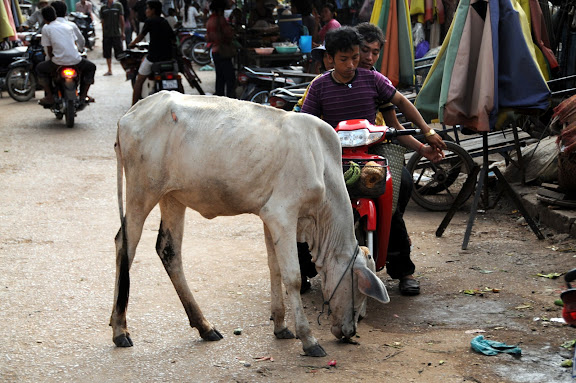
PHOTOS: Kratie life near the Market / La vida en Kratie cerca del Mercado


Click on the photo or HERE to see pics of Kratie town centre / Haz cli en la foto o AQUI para ver fotos del centro urbano de Kratie

Read more on this post/ Continuar leyendo esta entrada...

Wednesday, 3 September 2008

OUR KRATIE HOME / NUESTRA CASA EN KRATIE


Click on the photo for a tour of our home in Kratie / Haz clic en la foto para darte una vuelta por nuestra casa en Kratie
Read more on this post/ Continuar leyendo esta entrada...
Friday, 22 August 2008

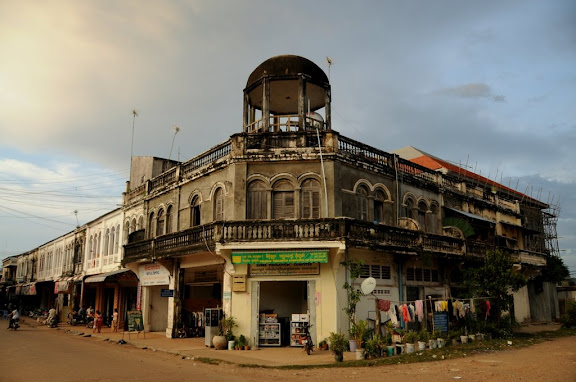
ELENA'S PATIENTS - LOS PACIENTES DE ELENA

[Click on the photo to meet Elena's patients / Haz clic en la foto para conocer a los pacientes de Elena ]

Well, after almost 2 months of work here, it is time to tell you a little bit more about my experience here.

Bueno, después de casi dos meses de trabajo aquí, es hora de contaros un poquito sobre mi experiencia.


The centre is inside of a hospital complex but independent of it. A few patients from the hospital wards are referred to the clinic.

La clínica se encuentra independiente dentro de un complejo hospitalario. Pocos pacientes del hospital necesitan ir a la clínica.

Within the working hours, there are organised appointments, however some people show up without an arranged appointment, and we have to see them as well. Some of the patients receive accommodation at the centre. On top of that, we also get referrals from the hospital wards, and have to organize community visits for the patients that can not get to the clinic or need a follow up.

Durante el trabajo hay citas organizadas, pero hay personas que se presentan sin citas, a las que también hay que valorar. Algunos pacientes residen en alojamientos proporcionados por el centro. Además también tenemos que ver a pacientes referidos por salas del hospital y organizamos visitas comunitarias para aquellos que no pueden asistir a la clínica o necesitan un seguimiento posterior al tratamiento.

We are currently in the middle of the wet season, so most of the people are working on the rice fields, and families struggle to find the time to take their relatives into the clinic, as they need an income. This means more visits in the community, specially to see cerebral palsy kids. When this type of patients visit the clinic it is most of the times just for the day to have their trolley or wheelchair adjusted, but very rarely do they stay for rehabilitation. In this short period of time there is a lot of work to do with the families, trying to explain the importance of the exercises, to teach them how to carry out the movements or activities, how to handle and stimulate the kids, the importance of correct positioning, etc.

Estamos a mitad de la época de lluvias, así que la mayoría de las personas están trabajando en los campos de arroz, y es muy difícil para las familias encontrar tiempo para llevar a sus familiares al centro, ya que necesitan el dinero. Razón por la que la mayoría de los niños con parálisis cerebral los tenemos que ver en la comunidad. Si van a la clínica es sólo un día, para revisar la silla de ruedas o el carrito, pero es muy raro que se queden para rehabilitación. Es por eso que en este corto período de tiempo tenemos que trabajar mucho con las familias, para concienciarles de la importancia de hacer bien los ejercicios, enseñarles cómo llevar a cabo los distintos movimientos y actividades, cómo manejar y estimular al niño, la importancia de un posicionamiento correcto, etc.

So far, I have seen and treated a woman, who was referred from one of the hospital wards, with Parkinson symptoms but without confirmed diagnoses; 4 kids with cerebral palsy, one kid with brain damage due to a virus, one kid with balance problems, 4 adults with stroke, etc. I have also assisted the physiotherapist to make serial castings for babies and kids with club foot. The majority of amputees come to the centre, as outpatients, to review or change their artificial limbs; so far my intervention has not been needed because they are well integrated in their communities: most of them continue being farmers, fishermen, sellers, etc.

De momento he visto y tratado una mujer en el hospital con síntomas de Parkinson pero sin diagnóstico confirmado, 4 niños con parálisis cerebral, un niño con daño cerebral debido a un virus, un niño con problemas de equilibrio, cuatro adultos con accidente cerebro vascular agudo, etc. He asistido al fisioterapeuta a escayolar los pies zambos de bebes y niños. La mayoría de los amputados que vienen, son para revisar la prótesis o cambiarla, y lo hacen a través de consultas externas. De momento no han necesitado mi intervención ya que están muy integrados en su comunidad: muchos de ellos siguen siendo agricultores, pescadores, vendedores ambulantes, etc.

Apart from that, since the beginning I have been treating everyday several resident patients, who live with their families in accommodation offered by the centre.

Además, desde el principio he estado tratando a diario a varios pacientes que residen con sus familias en alojamiento proporcionado por la clínica.

One of them is a married man with 3 kids (2, 4 and 7 years old) who has a tetraparesia after falling down from a mango tree.

Uno de ellos es un hombre casado con 3 hijos (de 2, 4 y 7 años) que se quedó tetraparésico tras caerse de un árbol de mangos.

The main goal of my intervention is to teach him to get dressed. After 3 weeks of work he was able to put on/off a polo shirt and short trousers. He can now also comb his hair, brush his teeth, shave with some ADL aids we made for him, and feed himself with an adapted spoon.

El objetivo principal de mi intervención es que sea capaz de vestirse. Tras las primeras 3 semanas ya podía ponerse y quitarse una camisa poloy los pantalones cortos. Ahora ya se puede peinar, lavarse los dientes, afeitarse gracias a unas ayudas técnicas que le hemos hecho, y es capaz de comer con una cuchara adaptada.

Another daily patient I have been treating is an 18 years old lad who had meningitis that resulted in his right side being paralysed. Apart from that, 8 years ago he had a fall which dislocated his right elbow. The first time I saw him, his affected side adopted a flexor pattern and he did not have any active movements. I have worked at the proximal level, the shoulder and the scapula, doing passive movements, self assisted movements, weight bearing exercises on the affected side and trying to facilitate normal patterns of movements.
Currently, in supine lying down, he is able to flexion the shoulder 80 degrees with the elbow flexioned or extended, and the same for the horizontal and vertical shoulder abduction. He can also:

· Hold the arm straight in 90 degrees when this position is facilitated.
· Extend the elbow with the shoulder flexioned and also abducted.
· Extend the elbow when he is sitting.
·
Extend the wrist when arm and forearm are supported.
He has improved in dissociating the arm movements and the trunk movements, as well as the shoulders and hips movements. He had to leave a week ago due to family issues; it was a pity because the last day he showed for the first time some voluntary movements of the fingers.

Otro de mis pacientes diarios es un chico de 18 años que tuvo una meningitis y como resultado se le ha quedado el lado derecho hemipléjico. Aparte de eso hace 8 años tuvo una caída y se dislocó el codo derecho. La primera vez que le ví su miembro pléjico adoptaba un patrón flexor y no existía ningún movimiento activo. He trabajado con él a nivel proximal, hombro y escápula, haciendo movimientos pasivos y auto-asistidos, ejercicios para poner peso en el lado pléjico y facilitar patrones normales de movimiento.En la actualidad puede flexionar el hombro en decúbito supino unos 80 grados con el codo flexionado y extendido, lo mismo para la separación horizontal y vertical del hombro. También es capaz de:
· Mantener el brazo levantado a 90 grados cuando se le facilita dicha posición.
· Extender el codo en decúbito supino con el hombro flexionado y también con el hombro abducido.
· Extender el codo cuando está sentado.
· Extender la muñeca cuando se le sujeta el brazo y el antebrazo.
Ha mejorado en disociación de los movimientos del brazo y del tronco, así como los de la cintura pélvica y escapular. Hace una semana se tuvo que ir debido a problemas familiares. Fue una pena porque el último día por primera vez mostró movimientos voluntarios en los dedos.

For the last two weeks I have also been doing daily treatment of a 6-year-old cerebral palsy girl. And a couple of days ago I started treating a 6-year-old hemiplegic boy.

Las dos últimas semanas he estado tratando diariamente a una niña de 6 años con parálisis cerebral. Hace un par de días empecé a tratar a un niño hemipléjico de 6 años.

To tell you the true, the work with the patients is incredible and very rewarding. These are very tenacious, motivated and therapy committed individuals. Therefore, it is easy to see results that make worth their efforts and dedication.

Finally, a special mention to the very friendly staff at the Centre, whose patiente and self-less assistance in translating makes my job here that much easier: the teacher Sokheang, the physios Somneang & Sokny, and the orthopaedists Mao & Sai.


La verdad que el trabajo con ellos es increíble y muy satisfactorio, son personas muy tenaces, motivadas y comprometidas con la terapia. Así que es fácil ver resultados que premian su esfuerzo y dedicación.

Por último, una mención especial a los encantadores miembros del equipo del Centro, cuya paciencia y ayuda desinteresada en labores de traducción hacen mi trabajo mucho más sencillo: la profesora Sokheang, los fisios Somneang y Sokny, y los ortopedas Mao y Sai.


Well I better stop boring you with my stuff!... I will try to keep you updated of the progresses my patients achieve.

¡Bueno dejo de aburriros con lo mío!... Intentaré manteneros informados sobre los progresos que mis pacientes vayan consiguiendo.

Maria Elena Gutiérrez López
Read more on this post/ Continuar leyendo esta entrada...

Tuesday, 12 August 2008

OUR WORKPLACE: THE KRATIE CENTRE / NUESTRO LUGAR DE TRABAJO: EL CENTRO KRATIE


Click on the VIC logo above to see pics of the Kratie Centre, were we work, and the services it provides / Haz clic en el logo de VIC arriba para ver fotos del centro Kratie, donde trabajamos, y de los servicios que proporciona


We thought it was about time we told you more about our workplace, the VIC Kratie Physical Rehabilitation Centre, so please keep on reading to know more about its background and the areas of support that it offers.

Pensamos que ya era hora de que os contáramos un poco mas sobre nuestro lugar de trabajo, el Centro de Rehabilitación Física en Kratie, así que seguid leyendo para saber un poco más sobre sus orígenes y los servicios de ayuda que ofrece.

What is Veterans International Cambodia (VIC)? / ¿Qué es Veterans International Cambodia (VIC)?

Veterans International Cambodia (VIC) was set up by the Vietnam Veterans of America Foundation, a humanitarian organization working to support victims of war in post-conflict countries.

Veterans International Cambodia (VIC) fue creada por la Fundación de Veteranos Americanos del Vietnam, una organización humanitaria que se encarga de apoyar a víctimas de países que han estado en guerra.

In 1991 VIC began offering basic replacement limbs and wheelchairs to people debilitated by anti-personnel landmines and unexploded ordinance. The programme has now expanded to provide extensive rehabilitation services to people with various disabilities, including amputees, polio, clubfoot and cerebral palsy.

En 1991 VIC empezó ofreciendo piernas artificiales y sillas de ruedas básicas a personas afectadas por minas antipersona. El programa se ha expandido y ahora ofrece servicios de rehabilitación extensivos a gente con diversos tipos de discapacidades, incluyendo amputados, polio, pies zambos y parálisis cerebral.


Facts about VIC. / Datos sobre VIC

VIC has three centres in Cambodia:
· Kien Khleang in Phnom Penh
· Prey Veng in the South
· Kratie in the North East.

VIC tiene 3 centros en Camboya:
· Kien Khleang en Phnom Penh (la capital de Camboya)
· Prey Veng en el Sur
· Kratie en el Noreste.

VIC places great importance on equal opportunities and was the first organization in Cambodia to actively employ disabled staff, who now make up over 30% of the workforce.

Para VIC la igualdad de oportunidades es de gran importancia, y fue la primera organización en Camboya que empleó de forma activa a personal discapacitado, que actualmente constituye el 30% de la plantilla.

The three centres provide support to over 700 people with disabilities every month.

Los tres centros proporcionan cada mes apoyo a más de 700 personas con discapacidad.


Background to VIC Kratie. / Los orígenes del Centro VIC en Kratie

In 1994 VIC began providing rehabilitation services for amputees in northeast Cambodia, from a small prosthetic workshop in Stung Treng. However, it was soon found to be an unsuitable location, because many amputees were going to great lengths to come and receive treatment.

En 1994 VIC empezó proporcionando servicios de rehabilitación para amputados en el noreste de Camboya, en un pequeño taller de prótesis en Stung Treng. Pero pronto se hizo patente que esta no era la localización adecuada, ya que a muchos amputados les suponía viajar largas distancias para recibir tratamiento.

As a result, a mobile workshop fitting amputees in their local communities was established and, over the next year, provided approximately 380 amputees with simple Jaipur limbs. The mobile workshop ceased operations in 1996, since it had provided assistance to the region’s known amputee population. However, Jaipur limbs need replacing every two years and are only suitable for amputees. This left a significant proportion of the region’s disabled population unattended to.

Como resultado se creó un taller móvil para tratar amputados en sus comunidades locales, y que durante el primer año proporcionó miembros artificiales básicos (del tipo Jaipur) a unos 380 amputados. En 1996, el taller móvil dejó de ser operativo, ya que se había proporcionado asistencia a la población de amputados de la región. Pero los miembros artificiales Jaipur necesitan reemplazarse cada dos años, y de los mismos sólo se benefician los amputados. Por lo que se dejaba sin atención a una proporción significativa de la población discapacitada de la región.

A centre capable of making polypropylene replacement limbs and other devices, in a location with good transport links was needed. Kratie was chosen as it is located on the Mekong River and has a high population.

Era pues necesario un centro capaz de fabricar miembros artificiales con polipropeno y otras ayudas, en una localización con buenas comunicaciones. La ciudad de Kratie fue elegida por estar situada a la ribera del Mekong y por su gran población.

After receiving nearly $67,000 from Kusanone, a Japanese aid organization, the Kratie Physical Rehabilitation Centre opened in 2000. Equipment and materials were generously donated by the Dr. Scholl Foundation and the Westport, Connecticut Rotary.

Después de recibir casi $67,000 de Kusanone, una organización de ayuda japonesa, el centro de rehabilitación física de Kratie abrió en el año 2000. Los equipamientos y materiales fueron donados generosamente por la fundación del Dr. Scholl y el Club Rotario de Westport, Connecticut (USA).


How does VIC Kratie help people with disabilities? / ¿Cómo ayuda el centro VIC de Kratie a personas con discapacidades?

Kratie Physical Rehabilitation Centre, our workplace, has 11 members of staff who provide several areas of ongoing and much-needed support for people with disabilities. The aim is for patients to be able to carry out their activities of daily living unaided, make an income to support their families and send their children to school.

El centro de rehabilitación física de Kratie donde actualmente trabajamos tiene 11 empleados que de forma continuada proporcionan ayuda y cuidados muy necesarios en diferentes áreas a personas con discapacidades. El objetivo es que los pacientes puedan llevar a cabo sus actividades de la vida diaria por sí mismos, generar ingresos para ayudar a sus familias y mandar a sus hijos al colegio.

The areas of support offered to help improve the overall quality of life of people with disabilities are the following:

Las áreas en las que el Centro ofrece ayuda para mejorar la calidad de vida de personas con discapacidades son las siguientes:

1) Prosthesis and orthosis production. / Producción de prótesis y ortósis

The technicians make a range of devices to help improve the patients’ mobility, such as prosthetic limbs, orthotic braces and wheelchairs. The centre produces over 300 new prostheses and orthoses each year.

Los técnicos hacen distintos tipos de aparatos que ayudan a mejorar la movilidad del paciente, tales como miembros artificiales, ortósis de apoyo y sillas de rueda.

2) Physiotherapy treatment. / Tratamiento de fisioterapia.

The physiotherapists assess each patient and use muscle strengthening programmes and mobility training to maximize the patients’ independence.

Los fisioterapeutas valoran cada paciente y utilizan programas de fortalecimiento muscular y entrenamiento de la movilidad para maximizar la independencia del paciente.


3) CBR: Community Based Rehabilitation./ CBR: Rehabilitación en la comunidad.

After patients leave the centre, a member of staff visits them at home to monitor their situation, ensure their device is suited to their daily activities and that they continue to do the exercises prescribed by the physiotherapist.

Después de que los pacientes dejan el Centro, un miembro del personal les visita en sus casas para revisar su situación y asegurarse de que las ayudas les sirven en sus actividades diarias y que continúan haciendo los ejercicios prescritos por el fisioterapeuta.


4) Income generation. / Generación de ingresos

VIC also supports the economic development of rural and remote areas by providing grants to help patients set up small income generating projects within their local communities. Typical enterprises include farming, fishing, repairing motorcycles, hairdressing and selling groceries.

VIC también contribuye al desarrollo económico de áreas rurales y remotas a través de un sistema de inversiones pensado para que los pacientes establezcan proyectos de generación de ingresos a pequeña escala en sus comunidades locales. Ejemplos de este tipo de iniciativas son ayudas a la ganadería y la pesca, talleres mecánicos para motocicletas, salones de peluquería y pequeños comercios de ultramarinos


5) Increasing education. / Fomento de la educación.

The centre also provides support to ensure children with disabilities and children of landmine victims go to school by providing equipment such a uniforms and study materials.

El centro también proporciona apoyo para asegurar que los niños discapacitados y los niños de las víctimas de minas antipersona van al colegio, dándoles equipamiento tales como uniformes y materiales escolares.


How can you help? / ¿Cómo puedes ayudar?

If in the vicinity, you are very welcome to visit the centre, where a member of the team will show you around and you can see fist hand the valuable work carried out by VIC. Any donations are always gratefully received.

Si estás por Kratie, las visitas al centro son bienvenidas, un miembro del personal te lo enseñará y podrás ver de primera mano el inestimable trabajo que VIC lleva a cabo. Cualquier tipo de donación será siempre muy bien recibida.

Center opening times: / Horarios del centro:

Monday to Friday, Lunes a Viernes, 7:30-12:00 and 13:30-17:00

Contact in Kratie: / Información de contacto, Kratie:

Mr. Kimsan Sai, Site Manager /Gerente del Centro
Office/oficina: (++ 855) 072 971 597
Mobile/ móvil: (++ 855) 012 764 913
E-mail: kim_san@camintel.com

Veterans for America:
1025 Vermont Avenue, NW, 7th Floor, Washington DC, 20005, USA
Tel: (+ 1) 202 483 9222
Fax: (+ 1) 202 483 9312
http://www.veteransforamerica.org/


Read more on this post/ Continuar leyendo esta entrada...